
Library Volunteers are students who volunteer with Library staff to support and add value to services provided by the Library. We recruit new volunteers at the beginning of each academic year. Joseph Tustian is a 1st year BSc Economics student currently volunteering with our team. In this post, Joseph reviews his latest read.
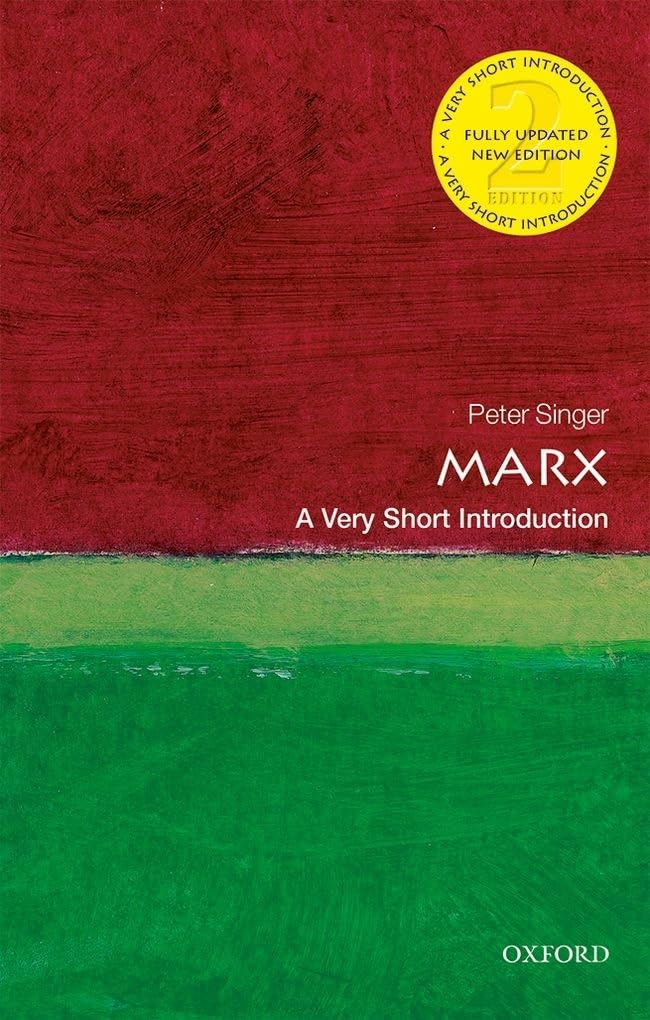
A review on Peter Singer’s assessment of Karl Marx’s legacy
This is a book I absorbed yesterday at the Brynmor Jones Library when heavy rain convinced me to stay and find something to do. Having seen it on my reading list, I wanted to finally have a basic understanding of the school of thought that I have always rejected: Marxism. Going into this book with such a strong bias and having reached the end in just three and a half hours forced me through many rapid changes in perspective. It is both horrifying and gratifying to see that all real-world examples of Marxist inspired communism would go against the core principles of Marxism to begin with. Whilst reading this book, I was able to retain my rejection of communism being ‘the riddle of history solved’ (Singer, 1980). However, my stronger acceptance of it as a theory has exposed the capitalistic flaws of both past and modern economic systems to me.
I cannot recommend this as a gripping, mini biography but I was moved by both the tragedy Karl Marx and his wife experienced in their late adult lives as well as the hardship they overcame together. I admired the interest in contemplating the opinions Karl Marx would have had of the people who led communist regimes inspired by his Marxist values. Especially since Singer (1980) partly drew them from the reactions shown in response to false conclusions made by followers to which Marx stated, ‘All I know is that I am not a Marxist.’ This strong irony reveals multitudes about Marx’s character and hints at how he was so successful in influencing people more so after his death. The existence of Singer’s book published nearly 100 years later favours this point.
I think this book would suit those who hold an interest in either politics, economics, or philosophy the most. Particularly for those who have heard of Marxism before and are attracted by its edginess and association with extremist leaders. If you pursue a study of the sciences, then please DO NOT read this book or any on the topic of Marxism as it will only infuriate you. As pointed out by Singer (1980) ‘it is manifestly not a scientific enterprise’ as Marx only presents theories and does not try to prove them with experiments or data.
References:
Singer, P. (1980) Marx: a very short introduction. Oxford: Oxford University Press Inc.